Androgenetic alopecia
Pattern Hair Loss
Gradual thinning at the part, crown, or hairline as follicles produce finer, shorter hairs. Genetics and hormone sensitivity can contribute.

Hair loss can have many different causes. Learning the differences can help you ask better questions and find the right kind of support.
Tell Us Your Hair Loss Story →
Alopecia simply means hair loss. The type of hair loss tells us more about what is happening. Several conditions can occur at the same time, so one image or symptom cannot tell the whole story.
Follicles are not permanently replaced by scar tissue. Regrowth may be possible, depending on the cause and treatment.
Inflammation can destroy follicles and leave scar tissue. Protecting the remaining follicles through early medical care is important.
Gradual thinning at the part, crown, or hairline as follicles produce finer, shorter hairs. Genetics and hormone sensitivity can contribute.
Increased shedding that can follow illness, childbirth, stress, rapid weight loss, or nutritional changes. It often starts a few months after the trigger.
Repeated pulling from tight braids, extensions, or ponytails can damage follicles, especially along the hairline. Long-term tension can cause permanent hair loss.
An autoimmune condition in which the immune system targets hair follicles. It can cause sudden round or oval patches of hair loss and may also affect eyebrows or eyelashes.
A scarring form of hair loss that usually starts at the crown and spreads outward. Early evaluation by a dermatologist can help protect the remaining follicles.
A scarring condition that can cause a band of hair loss along the front or sides of the hairline. Eyebrows may also thin. Early medical evaluation is important.
Each follicle follows its own rhythm of growth, transition, and rest. Shedding releases an old strand so the cycle can continue.
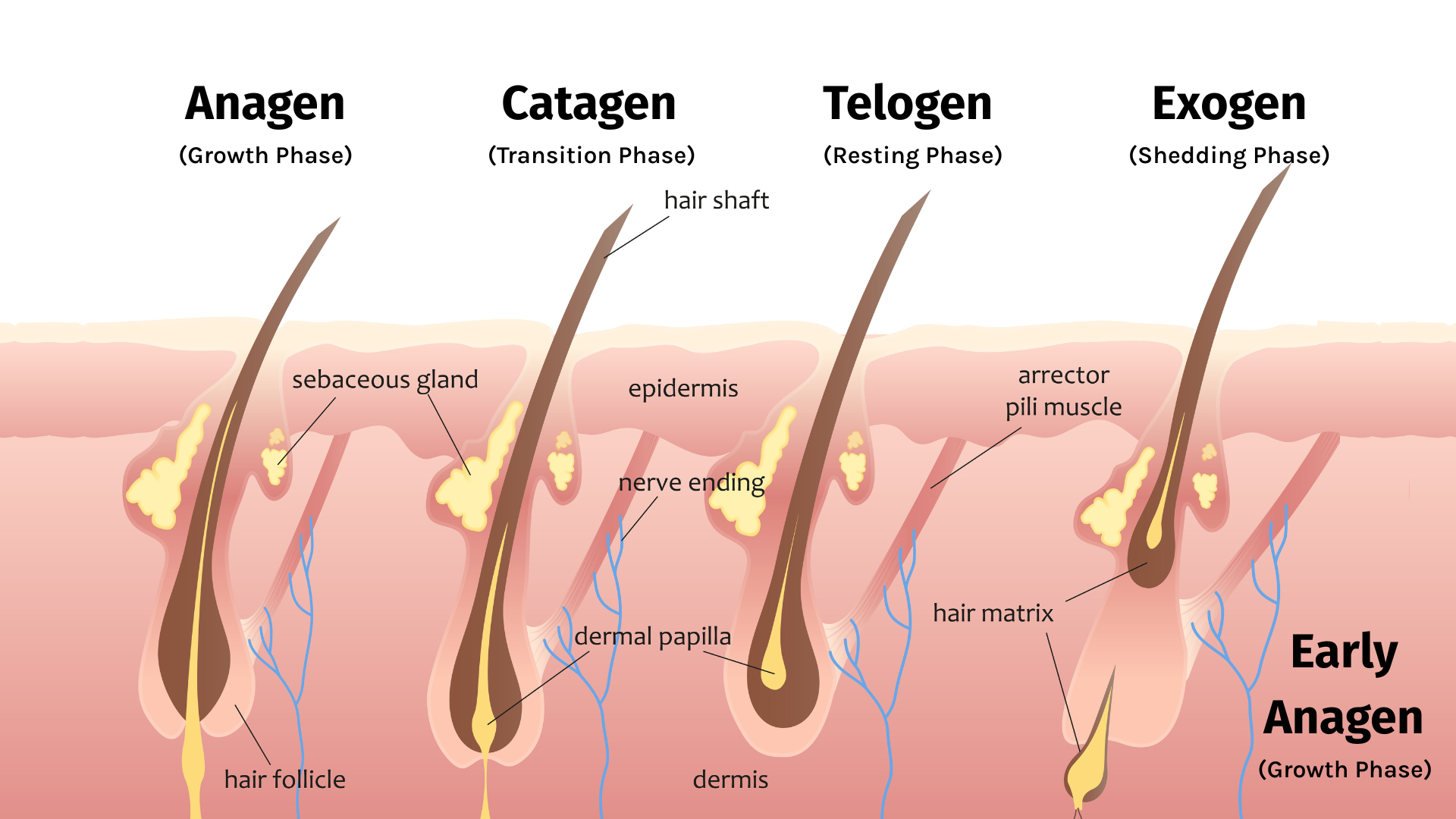
The follicle produces a new hair strand, which continues to grow. This active stage usually lasts years.
Growth stops, and the lower part of the follicle shrinks. This short changeover lasts a few weeks.
The old hair stays in the follicle while it rests. This stage usually lasts several months.
The old hair is released from the follicle. New growth may already be starting as the old strand sheds.
Your follicles are in different stages at the same time. Some hairs grow while others rest or shed. Changes in this balance can affect fullness—and visible improvement takes time because hair grows gradually.
Exogen is the shedding process, which can overlap with the start of a new growth stage. This visual simplifies a continuous cycle.
At Abliss, we listen to your story, document visible scalp findings, and discuss a personalized hair plan. When a medical cause is suspected, a dermatologist can diagnose it and recommend treatment. Supportive scalp care can work alongside that care.
Sudden patches, ongoing pain or burning, sores, or suspected scarring are reasons to seek prompt medical evaluation.